FINE-LINE PRACTICE
Fine-Line Tattoo Practice: A Review Checklist
Review fine-line tattoo design and assigned practice with clear photographs, focused tutor questions and a portfolio that keeps each attempt in context.
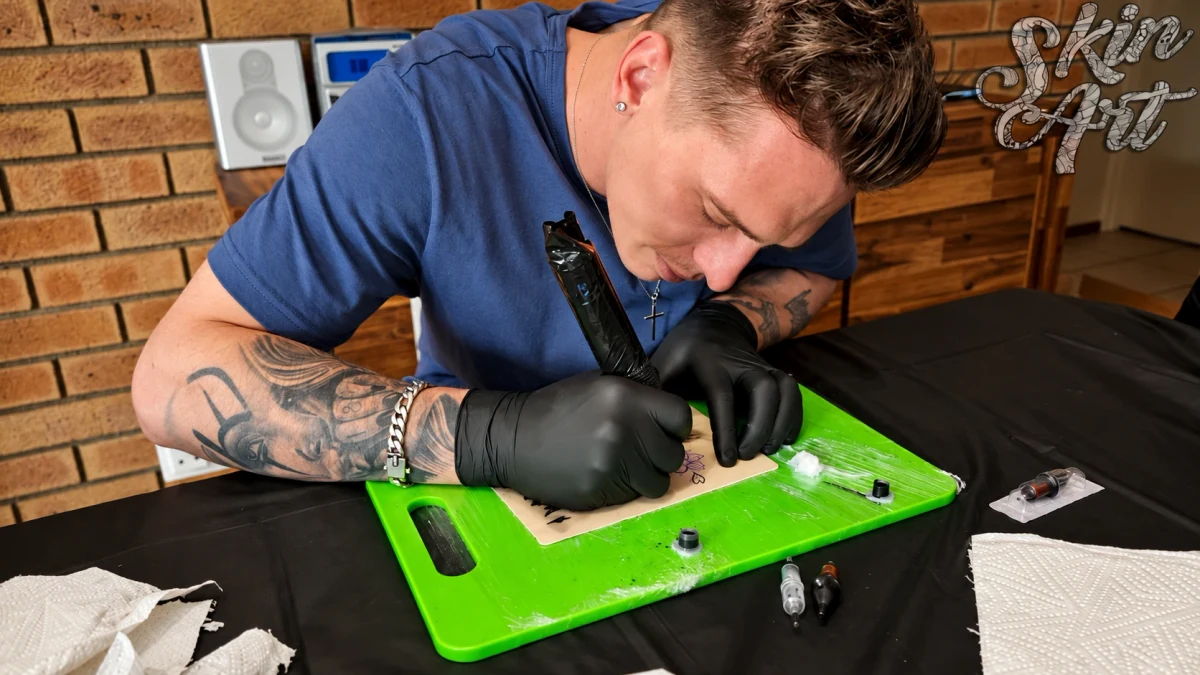
Fine-line tattooing is included in Skinart’s tattoo course alongside blackwork, tribal, traditional, watercolour and colour realism. Delicate designs make a useful reason to keep a careful practice record: the whole exercise, the small detail you are questioning and the advice that belongs to that attempt.
Use this checklist for the design work and synthetic-skin exercises assigned by your course. It helps organise a review, rather than grading your readiness to work with clients.
Label the lesson and the attempt
Write down the lesson, task and practice material before reviewing the result. Save the complete exercise with a clear name, such as fine-line-outline-attempt-02. Keep the earlier attempt in the same folder. A photograph without the task can leave the reviewer guessing what you were trying to achieve.
If you are working on an original drawing, keep the version at its intended size as well as a close-up. A design that looks clear when enlarged may have crowded details at the smaller size. Record the size you used so the next comparison is meaningful.
Separate design questions from practice questions
Look at the drawing first. Which gaps remain open? Where do lines meet? Does a small detail support the design or make it harder to read? These are different questions from how an assigned linework exercise turned out on a practice surface.
For example, save a leaf drawing with several internal veins beside a simpler version. Ask which details should remain before moving to the next assigned task. Do not assume that changing equipment will resolve a crowded drawing.
Make the detail visible in the photograph
Use one complete view and one close-up from the same attempt. Keep the surface flat, check that the marks are in focus and avoid a reflection across the area you want reviewed. Include the ordinary and unsuccessful parts of the exercise, not only a selected highlight.
Keep the unedited original. If you add a circle or arrow to explain your question, save it as a separate annotated copy. The practice photography guide provides a submission checklist that you can reuse.
Write an observation, not a diagnosis
Describe what you can see: “The gap closes in this corner” or “These two curves look different”. That gives your tutor an identifiable point to review. Avoid assigning a cause from the photograph alone or changing several parts of the setup without understanding the instructions.
A useful question might be: “This is attempt two of the assigned curved-outline exercise. I have attached the complete surface and a close-up of the lower junction. I repeated the earlier advice, but that junction still looks different from the reference. What should I focus on in the next attempt?”
Keep a short review checklist
- Context: Can the tutor identify the lesson, task and attempt?
- Scale: Is the complete design visible at the size used?
- Detail: Is the question area clearly photographed without editing that hides marks?
- Comparison: Is the earlier attempt available under similar viewing conditions?
- Next step: Have you recorded the actual advice rather than guessing what to change?
Copy these headings into the existing tattoo practice log. You do not need a separate presentation for every exercise; a clear record and one focused question are enough to start a useful discussion.
Show the repeat beside the original
After feedback, follow the agreed exercise instructions and save the repeat separately. Note the one point you worked on and what you still need clarified. The feedback guide helps turn the response into a manageable task, while the learning portfolio guide explains how to retain the sequence.
Keep paper drawings, synthetic-skin practice and any other coursework clearly identified. Practice surfaces and photographs do not show how work will heal on a person. Assessment and progression follow the requirements for your selected course.
Connect the review to your study plan
Leave time for questions and repeats when you plan your study week. If feedback is needed before continuing, review completed work rather than filling the gap with unrelated technique changes. Choose your region below to see the current Skinart tattoo curriculum, including fine-line training, and the available study options.
Explore the current training options
Choose your region to review local course details, prices and enrolment terms on Skinart Training.